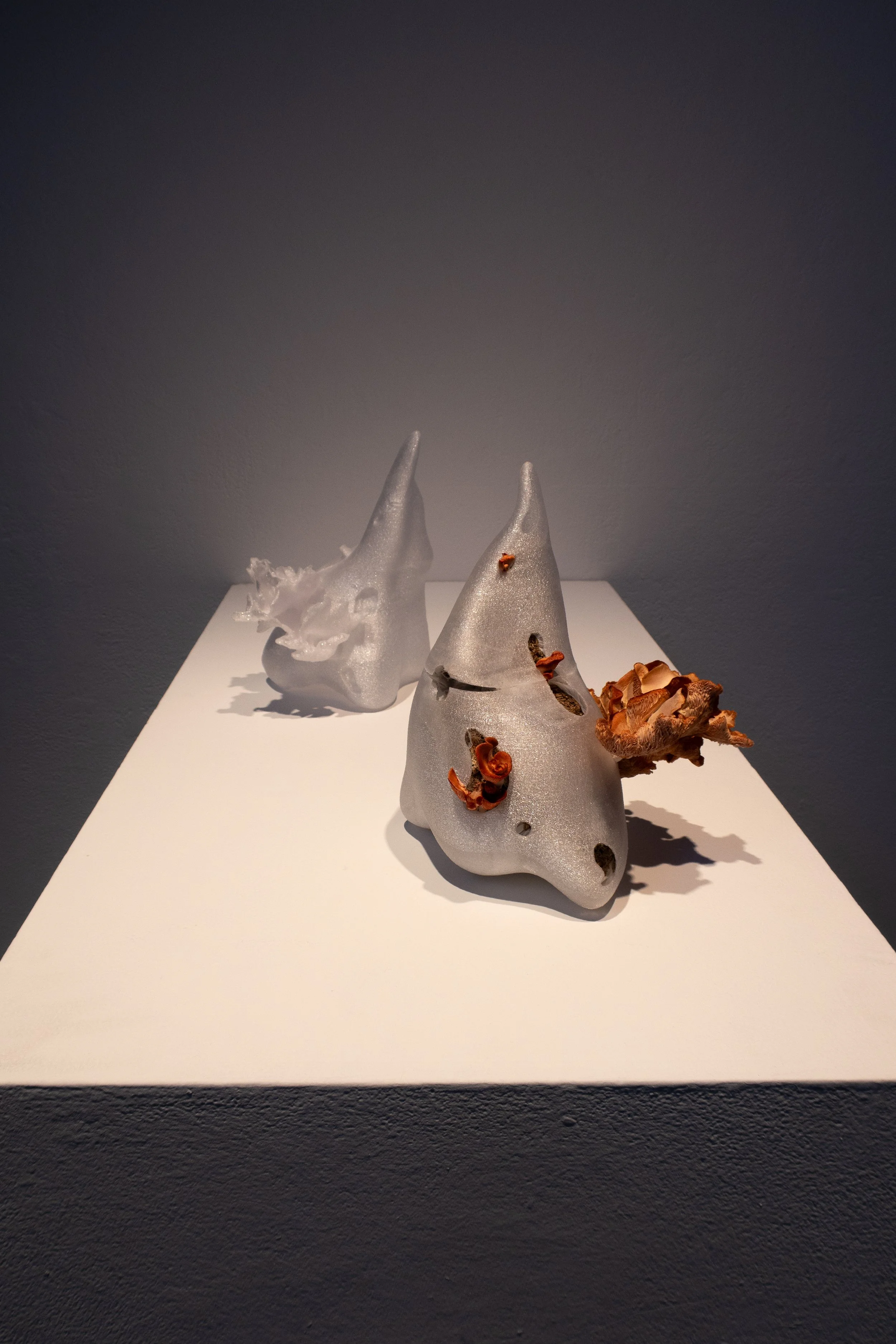
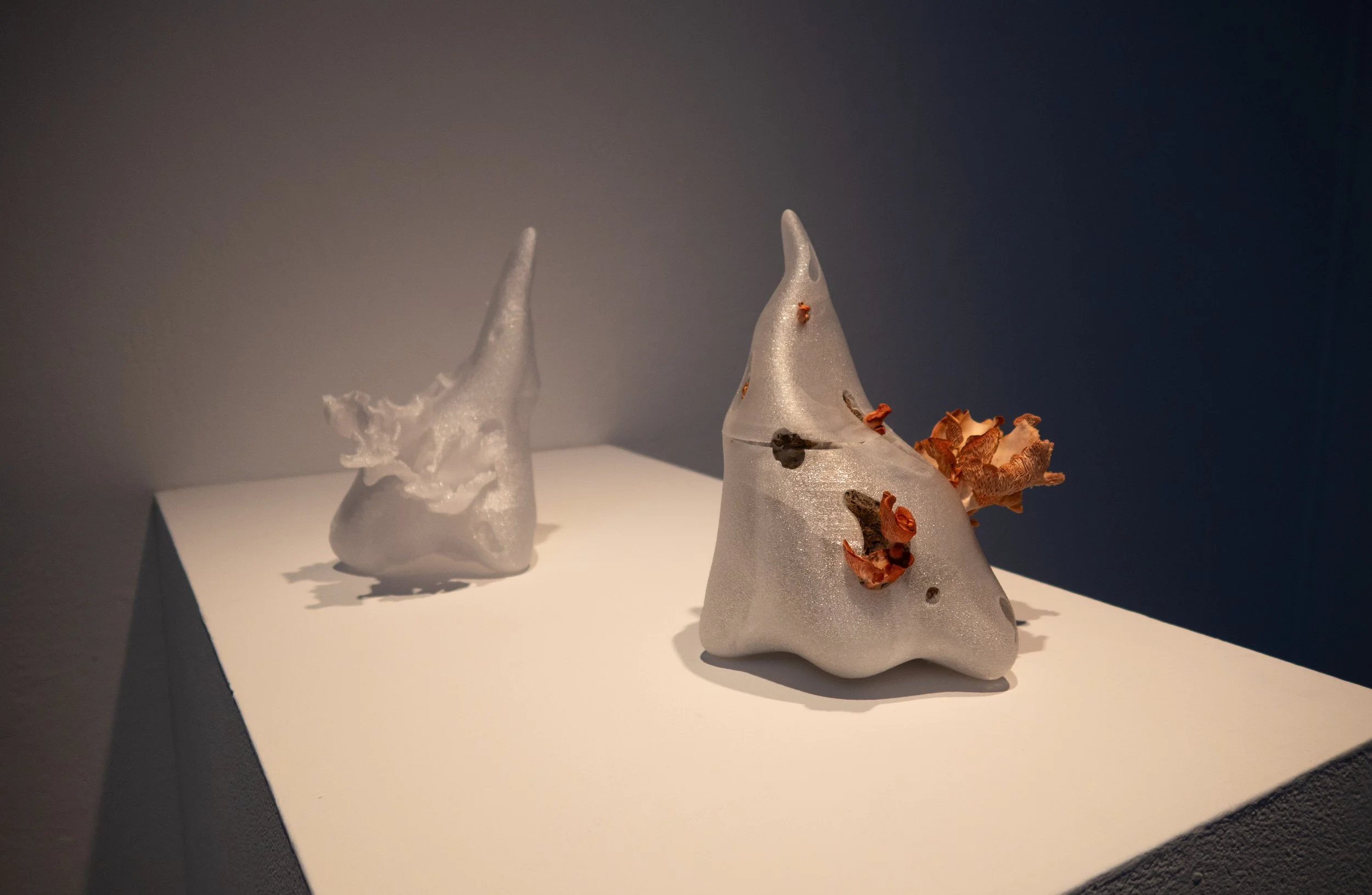
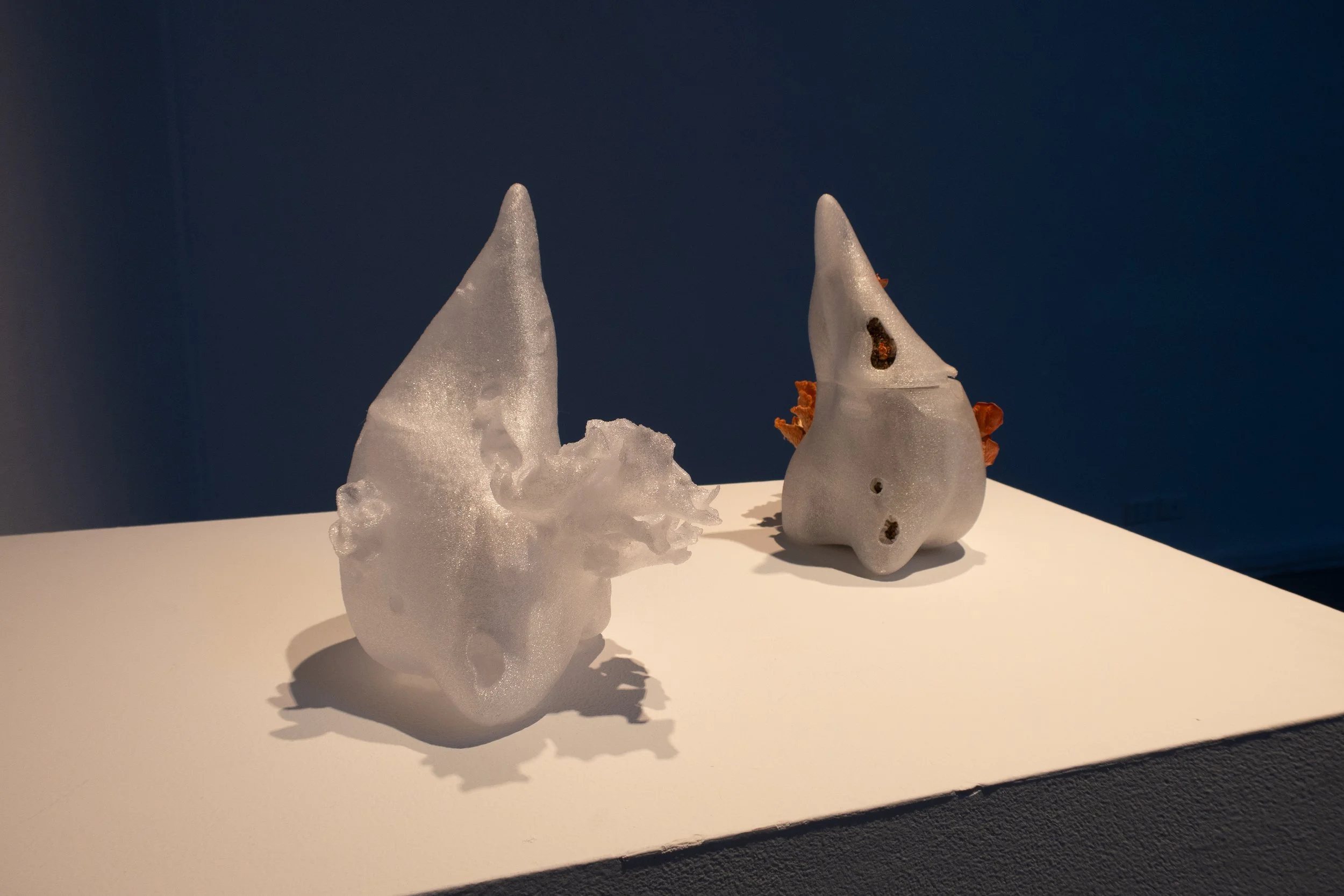
Respawn (2026)
Translucent 3D-printed PETG, pink oyster mushrooms (Pleurotus djamor), mycelium, substrate
Dimensions variable
Respawn extends the forms and ideas developed in Living, using one of its sculptures as the basis for an experiment in replication, transformation and continuity of self. The work takes inspiration from the logic of video games, in which a character can die and respawn in a restored state. This raises a broader question:
if a body is reconstructed as a replica of its original form, can this replica still be understood as the same self?
A mushroom-grown sculpture is 3D scanned and reprinted, reproducing much of its silhouette, volume and surface detail with considerable accuracy. At the same time, the process reveals the limits of replication. Certain details are lost through scanning and printing, while the mushroom’s colour and living materiality cannot be fully carried across into the translucent synthetic copy. The resulting form is therefore both recognisably the same and materially different. Respawn uses this gap between preservation and loss to consider identity as something that may persist through partial translation, alteration and reconstruction.
All photography by Liu Jiayi unless otherwise stated.